Most poker content on tells is a distraction. The internet is full of articles on trembling hands, eye contact and micro-expressions — tells that are unreliable at best and actively misleading at worst. The most profitable tells are not in a player’s pupils. They are in betting patterns and timing, and they work online as well as live.
A tell, in the plain sense, is an unconscious physical action, a verbal cue, or a betting pattern that leaks something about hand strength or intention. Reading those leaks — and hiding your own — can be a real part of a live edge. It is still only a supplement to ranges, pot odds, position and starting-hand discipline, not a replacement for them. Forget the amateur psychology; start with the hierarchy below, from most reliable to least.
The hierarchy: not all tells are equal
1. Betting-pattern tells — most reliable. Involuntary, consistent, and mathematically useful. A player who always continuation-bets strong flops and checks back weak ones is giving the game away. Those habits are hard to fake for a whole session without real discipline.
2. Timing tells — reliable online and live. How quickly someone acts often tracks confidence. Timing is a habit that is surprisingly hard to change over hundreds of hands, and because it applies online it is far more useful than any physical tell.
3. Physical tells — least reliable. Easiest to fake. Most useful as a tiebreaker on a read you already have from patterns and timing, not as the first thing you build a decision on. Beginners overweight these. Experts treat them as confirmation.
Betting-pattern tells: the real edge
Bet sizing. Players who bet larger on dry boards with monsters and smaller on wet boards “for protection” are announcing a range. Track size relative to the pot over many hands. Most people are more consistent than they think.
Check-raise frequency. Players who almost never check-raise are usually strong when they finally do — the range is tiny and nearly all value. Frequent check-raisers are less readable. Against the rare check-raiser, fold everything but the nuts more often.
River overbet. Recreational players almost never overbet the river as a bluff. When an inexperienced player shoves around twice the pot, they usually have a hand. Respect it unless you have the nuts.
Preflop limp-call. A limp that then calls a three-bet is often a strong hand being slow-played. At lower stakes a limp re-raise is still very often aces, kings or queens.
Street-by-street size changes can also show a draw getting there, and a habitual donk-bet (leading into the preflop aggressor) is often a weak draw or a narrow value hand, depending on the player. Once a pattern has narrowed a range, go back to the maths: pot odds decide whether a call is still right, and starting-hand ranges help interpret what is left.
Timing tells — they work online too
Fast action. A snap-call on the turn is often a draw or a medium-strength hand; with the nuts many players still pause. A snap-check is usually weakness — nothing to think about. A snap-raise is often strong, or a confident bluff from an experienced player, and is less common as a bluff at low-to-mid stakes.
Slow action (tanking). A genuine tank is usually a medium-strength decision; clear monsters and clear air often do not need the time. A tank-fold means they had something. A tank-call is often uncomfortable but justified by odds — a draw or a speculative hand.
Online-specific. Auto-fold or auto-check boxes produce instant actions, which is itself a tell. An instant check usually means the decision was made before the turn to act, and often signals no interest. Instant check/call can be thin showdown value. Chat boasts and distractions can leak intent the same way table talk does live.
Physical tells (live only): the three worth tracking
1. Genuine relaxation versus controlled stillness. Strong hands often produce ordinary calm. Bluffs take work. Look for someone holding their breath or sitting unnaturally rigid, versus normal breathing and small movement.
2. A glance at the chips after the flop. Players who connect often glance down involuntarily. If you see it, they liked the flop — then still check it against their betting.
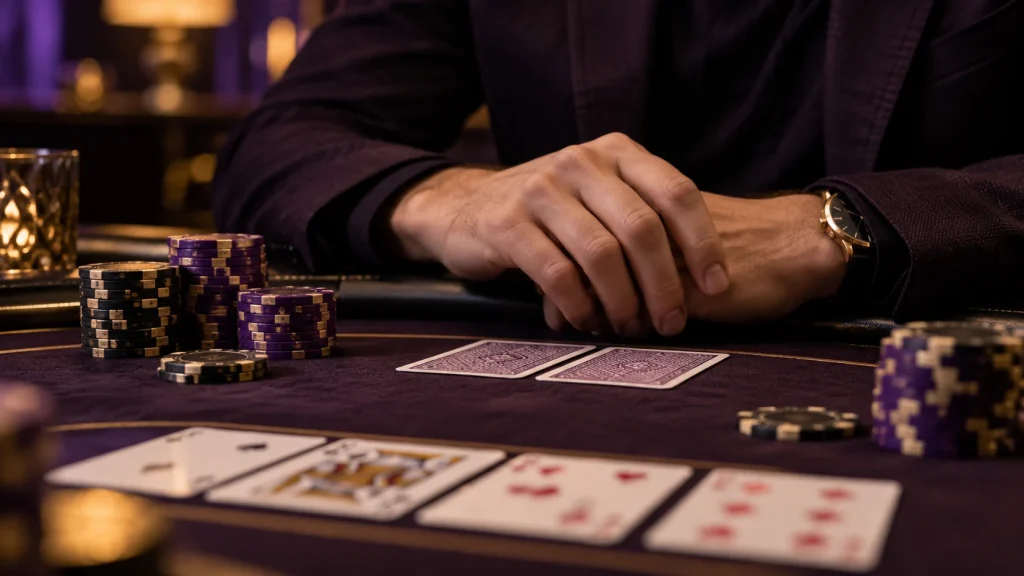
3. Reaching for chips early. An early reach usually means they already want to play the hand. Waiting, then a slow reach, is often less confident. Watch the hands, not the face.
Treat shaking hands with care. Some coaching still reads a tremble on a big bet as adrenaline from a strong hand (the old “weak means strong” school). Adrenaline is not specific — it also shows up on a bluff — so this site’s longer-standing advice still stands: do not treat a shake as a decision on its own. Use it only as a tiebreaker against a known baseline.
Ignore, or at least heavily discount: trembling as a standalone signal, elaborate eye contact (easy to fake), and chip tricks (usually habit).
Verbal tells and “weak means strong”
What people say can leak as much as what they do. Complaining about a bad run can precede a strong hand; over-talking to distract can travel with a bluff; needling (“you really shouldn’t call”) is often a bluff. The classic maxim is that players project the opposite of the truth: a sigh or a show of disinterest while betting often dresses up a monster; loud, theatrical confidence often dresses up a weak one. It is a starting point, not a law, and it only works relative to how that person usually talks.
The baseline principle
A tell is only useful relative to a player’s normal behaviour. If someone always talks, chatter in a big pot means nothing. If they are usually silent and suddenly become chatty, that is information. In the first half hour at a table, note how long they typically take to act, whether they reach early, whether they talk, and whether they watch the board or look away. Only deviations from that baseline are tells. That is why a stranger on hand one is hard to read, and why regulars become predictable.
Reliability caveats
- A tell shifts probabilities; it does not guarantee a hand.
- Experienced players fake tells on purpose (reverse tells).
- The same gesture means different things from a beginner and from a regular.
- Never let a single tell override ranges, pot odds, board texture and stack size.
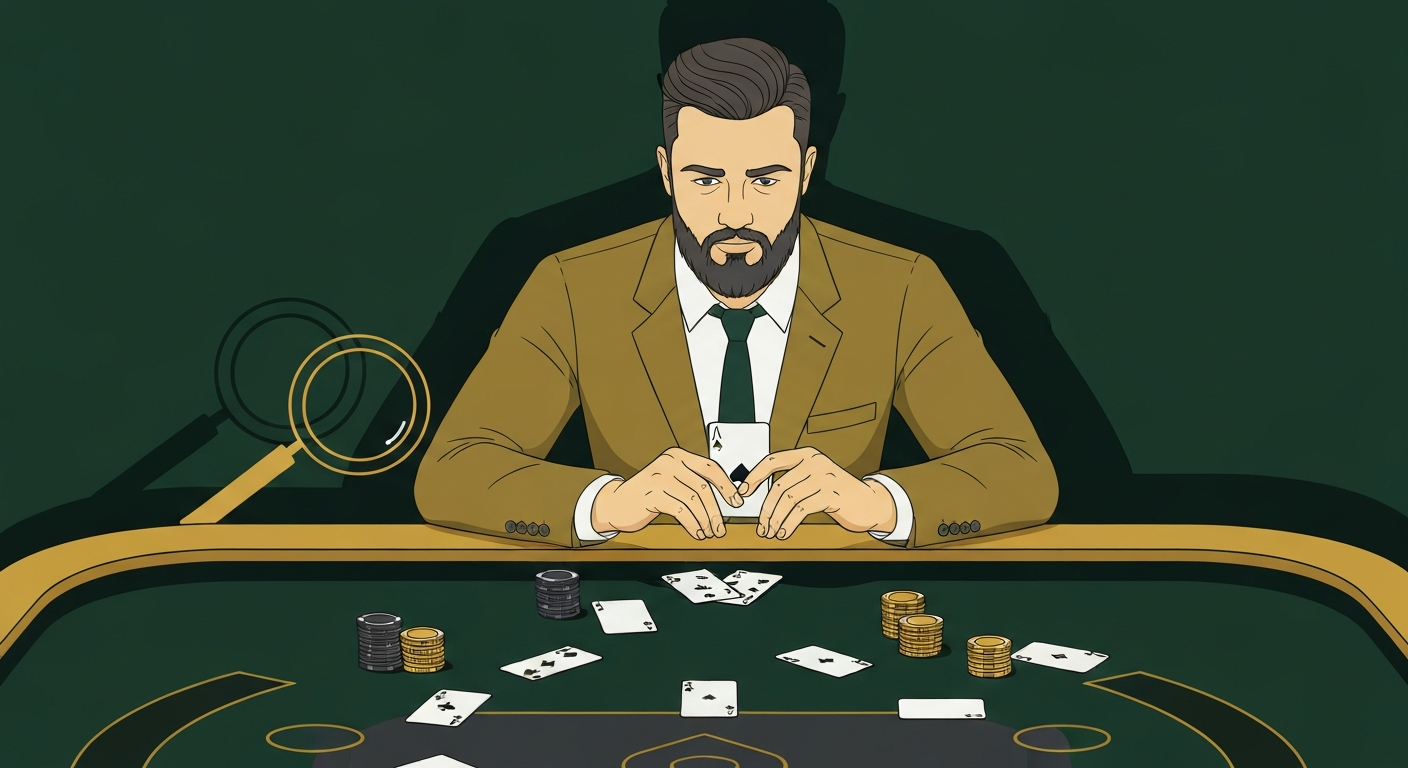
Common tells and how this site reads them
| Tell | Common read | Reliability, with context |
|---|---|---|
| Shaking hands on a big bet | Often taught as adrenaline from a strong hand | Moderate at best — adrenaline is non-specific; use only as a tiebreaker |
| Over-acting or staring down | Projecting strength, often a bluff | Higher when it is a clear break from that player’s baseline |
| Sighing or looking away while betting | Faking weakness, often a strong hand | Higher as a pattern, not as a one-off |
| Instant check (online) | No interest, weakness | Very high when it is a genuine auto-action, not a misclick |
| Bet-sizing deviation | A specific strong or weak range, or a bluff | High once you know that player’s normal size |
Protecting yourself from being read
Standardise timing: take a similar three to five seconds before you act, whether you are folding junk or raising the nuts. Snap-folding trash and snap-raising the nuts are both leaks. Standardise sizing: use the same size framework regardless of hand strength. Betting bigger with value and smaller with bluffs is a common leak good opponents will use. Live, touch your chips the same way every time; do not reach early only when you are comfortable.
Varying timing so that every snap decision disappears is the same idea as “act the same regardless of hand strength.” Consistency is the point, not a theatrical pause on every hand.
Where tells fit — and a short FAQ
Tells are the icing, not the cake. Hand ranges, pot odds, position and stack-to-pot ratio do the long-run work. Tells help narrow a range and tip a close decision. Relying on them without that foundation is a losing approach.
Are tells more important than fundamentals?
No. Ranges, pot odds and position win over time. Tells fine-tune decisions; they should not override a sound line.
How do I practise reading tells?
Live, pick one opponent and one behaviour at a time. Take notes, watch how they act on hands that go to showdown, and factor in how experienced they are.
Can I fake tells?
Yes — a reverse tell (acting weak with a monster) can work, but only against people who are actually watching, and only if you can do it consistently enough to be believed.
What is the biggest mistake?
Over-relying on a single tell out of context. Combine it with betting history, board texture and stack sizes. Betting-pattern tells remain the most reliable; physical tells remain the most overrated.